Facts about Parrots: 30 Secrets of Avian Intelligence
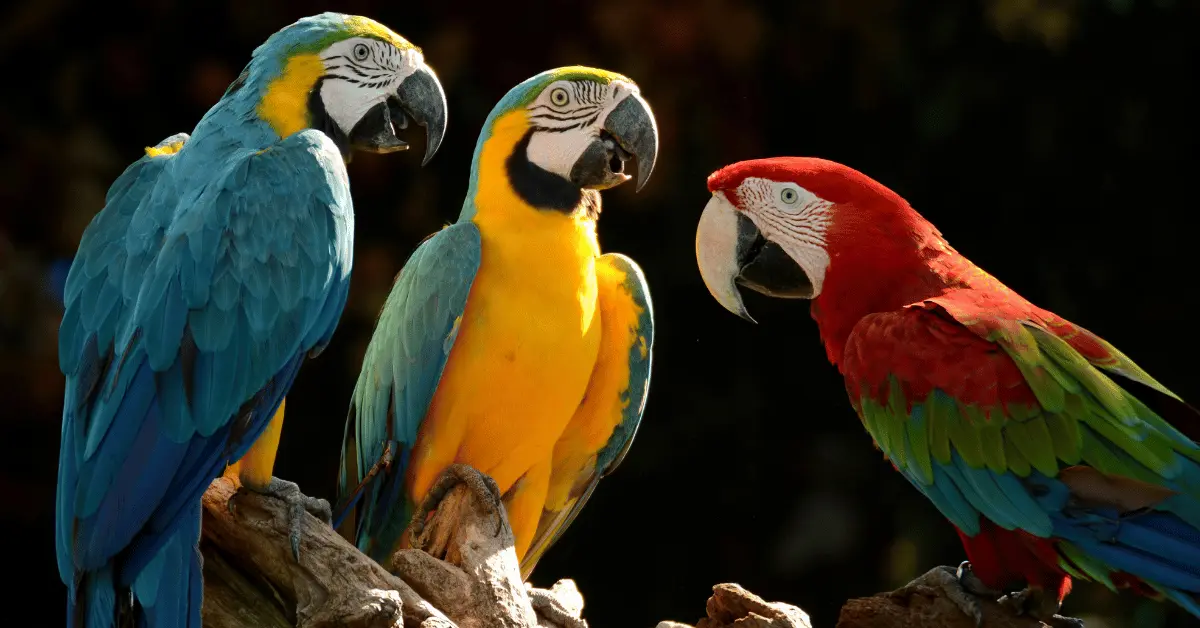
Parrots are often reduced to mere mimicry machines or colorful tropical decorations. However, modern ornithology and neurobiology have revealed that these birds possess cognitive abilities comparable to primates. Far from being simple imitators, parrots exhibit complex emotional lives, advanced logic, and unique physiological traits that have allowed them to thrive for millions of years.
Are parrots truly capable of understanding what they say?
Yes, scientific research in avian psychology confirms that certain species, such as the African Grey, can comprehend categories, colors, and quantities, using human language to communicate specific needs and abstract concepts.
This article examines 30 verified scientific facts regarding parrot evolution, neurobiology, and sensory systems to redefine our understanding of these feathered intellectuals.
Evolutionary Foundations and Structural Biology
The physical makeup of a parrot is a masterpiece of specialized engineering, designed for both agility and high-energy survival.
- Ancient Lineage: DNA sequencing shows that parrots (Psittaciformes) began diverging from other bird groups approximately 66 million years ago, shortly after the mass extinction of dinosaurs.
- Zygodactyl Feet: Parrots have a unique toe arrangement where two toes point forward and two point backward, allowing them to use their feet like hands to manipulate objects.
- The Third Limb: Their beak is not just for eating; it acts as a third limb. It is equipped with a kinetic joint that allows the upper mandible to move independently of the skull, providing immense crushing power.
- Vocal Organ: Unlike humans who use a larynx, parrots use a syrinx located at the base of their trachea. They can control the muscles of this organ to produce two sounds simultaneously.
- Longevity Genes: Some species, like the Macaw, have lifespans exceeding 60 to 80 years. Scientists believe this is due to specific genetic adaptations that repair DNA damage more efficiently than other birds.
- Feather Chemistry: The vibrant colors of parrots are not just from diet. They produce a unique pigment called Psittacofulvins, which is found nowhere else in the animal kingdom and helps feathers resist bacterial degradation.
- Metabolic Rate: A parrot’s heart can beat over 400 times per minute during flight, requiring a highly efficient respiratory system that utilizes air sacs to keep oxygen flowing constantly through the lungs.
- Brain-to-Body Ratio: Parrots have a brain-to-body mass ratio similar to higher primates, indicating a significant investment in neural tissue over physical bulk.
Cognitive Sophistication and Logical Thought
The “bird brain” insult is scientifically inaccurate when applied to parrots. Their neural pathways are wired for high-level problem solving.
- Medial Spiriform Nucleus: This specific part of the parrot brain acts as a high-speed highway between the cortex and the cerebellum, allowing them to process complex information much like a chimpanzee.
- Object Permanence: Parrots understand that an object still exists even if it is hidden from view, a developmental milestone that human infants reach at around 8 months.
- Recursive Logic: Some parrots have shown the ability to understand recursive patterns—the idea of structures tucked inside other structures—which was once thought to be a uniquely human linguistic trait.
- Tool Innovation: In the wild, parrots have been observed using sticks to crack nuts or even using pebbles to grind calcium from seashells to supplement their diet.
- Numerical Competence: Research has proven that parrots can count, understand the concept of zero, and perform simple addition and subtraction.
- Delayed Gratification: In “marshmallow tests,” parrots have demonstrated the ability to refuse a small immediate treat in favor of a better reward later, showing advanced impulse control.
- Self-Recognition: Several species have passed versions of the mirror test, suggesting a level of self-awareness and individual identity.
Sensory Perception and Social Complexity
Parrots inhabit a world of color and sound that is far more intense than the human experience.
- Tetrachromatic Vision: Humans see three primary colors, but parrots see four. They can see ultraviolet (UV) light, which makes forest canopies look entirely different to them than they do to us.
- Eye Independence: Parrots can move and focus each eye independently, allowing them to scan for predators and look at food at the same time.
- Temporal Resolution: Their eyes process images much faster than ours. While a television screen looks like a continuous motion to us, a parrot might see it as a series of flickering still images.
- Frequency Range: They can detect a wide range of frequencies, but they are particularly sensitive to the nuances of pitch, which allows them to identify individual family members by their specific vocal “signature.”
- Tactile Beaks: The tip of a parrot’s beak contains a high concentration of sensory corpuscles (Herbst corpuscles), making it as sensitive as a human fingertip.
- Eusocial Dynamics: Parrots do not just live in groups; they live in complex societies with hierarchies, “friendships,” and even regional dialects that vary from one flock to another.
- Altruistic Behavior: African Grey parrots have been observed helping other birds obtain food without any immediate benefit to themselves, a sign of empathy and cooperation.
Global Presence and Survival Challenges
The relationship between parrots and humans is ancient, yet today, their biological success is under threat.
- Niche Generalists: Parrots are found on every continent except Antarctica, ranging from the snow-covered mountains of New Zealand (the Kea) to the arid deserts of Australia.
- Pollination Role: Many parrot species are essential for forest health, acting as primary pollinators and seed dispersers for hundreds of tropical plant species.
- Vulnerability to Sound: Because of their sensitive hearing and social nature, noise pollution in urban areas can cause parrots significant psychological stress and disrupt breeding.
- Genetic Diversity Loss: Habitat destruction is the leading cause of population decline, with nearly one-third of all parrot species now classified as threatened or endangered.
- The Wildlife Trade: Their intelligence and beauty make them targets for illegal trade. Many wild-caught parrots suffer from “capture stress,” which can permanently damage their immune systems.
- Conservation Success: Species like the Puerto Rican Amazon have been brought back from the brink of extinction through intensive genetic management and captive breeding programs.
- Cultural Indicators: In many indigenous cultures, parrots are seen as messengers or symbols of wisdom, reflecting their true nature as the intellectuals of the sky.
Conclusion
Science tells us that a parrot is not a toy or a simple mimic, but a highly evolved survivalist with a mind capable of deep thought and emotion. Their ability to perceive ultraviolet light, solve multi-step puzzles, and form lifelong social bonds proves that they are among the most sophisticated creatures on Earth. To look at a parrot is to look at a 60-million-year-old success story of avian intelligence.
Sources and References
- National Center for Biotechnology Information (NCBI): Psittaciform Evolution and Genomics
- ScienceDirect: Cognitive Psychology and Avian Intelligence Studies
- Current Biology Journal: The Medial Spiriform Nucleus in Parrots
- World Parrot Trust: Parrot Conservation and Global Impact
- Journal of Ornithology: Sensory Biology and Visual Systems of Birds